Filed under Tailoring Corner
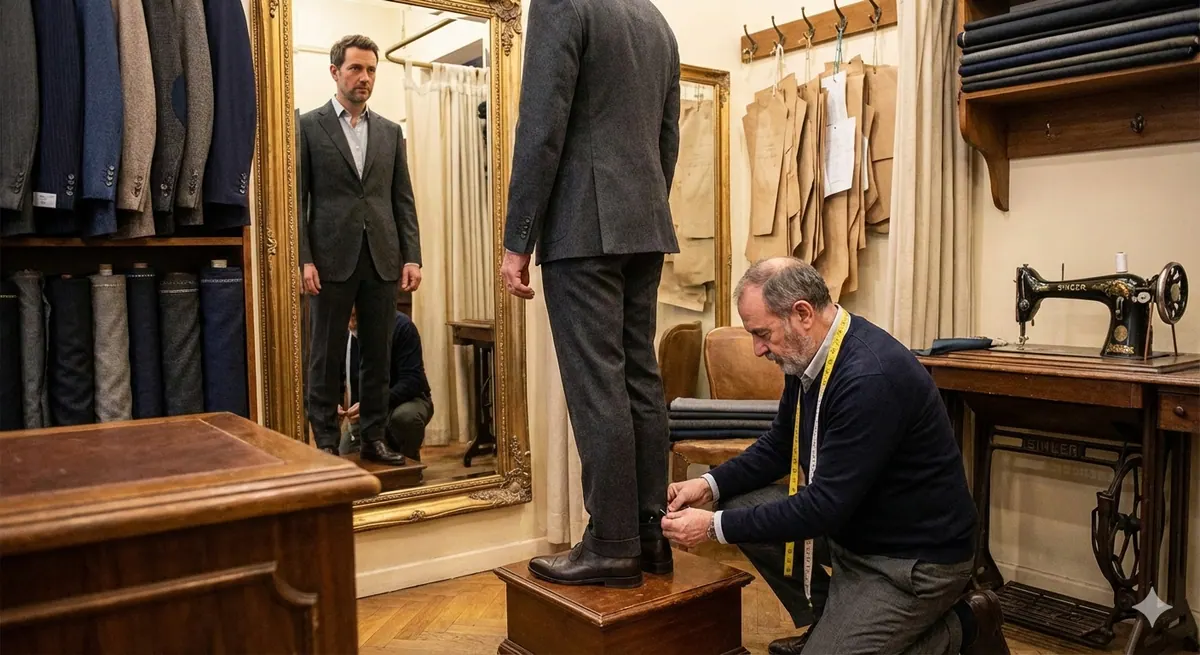
For a professional man, a suit is not clothing—it is infrastructure. It carries authority into the boardroom, credibility into negotiations, and confidence into every room entered. Yet most men spend thousands on suits that never quite fit, relying on off-the-rack sizing and rushed alterations that solve only part of the problem.
This tailoring suit guide exists to correct that pattern.
A properly tailored suit is not about trends or excess. It is about proportion, posture, movement, and intent. When tailoring is done correctly, the suit disappears—and the man takes center stage. When done poorly, even the finest fabric looks compromised.
What follows is a practical, experience-driven guide to understanding tailoring at a professional level: how to get your suit tailored, how to get fitted for a suit, what tailoring can and cannot fix, and when bespoke tailoring becomes the smarter investment. This is not a theory. It is how tailoring works in real life, under real deadlines, for men who cannot afford mistakes.
What Tailoring Actually Means (And What It Does Not)
Tailoring is often misunderstood as a single step at the end of buying a suit. In reality, it is a system of decisions that begins before a needle touches fabric.
At its core, tailoring is the process of refining a garment to align with an individual’s body, posture, and use case. It accounts for shoulder slope, arm rotation, stance, torso length, and how a man moves when seated, standing, or walking.
What tailoring is not:
- It is not resizing a suit into a different size.
- It is not cosmetic tapering alone.
- It is not guaranteed to fix poor starting construction.
This distinction matters because many men approach tailoring with unrealistic expectations. A suit with incorrect shoulders, imbalanced lapels, or mismatched proportions cannot be fully corrected. Tailoring works best when the foundation is sound.
A professional suit alteration guide should always start with this truth: tailoring enhances quality—it does not manufacture it.
How to Get Fitted for a Suit: The Foundation of Everything
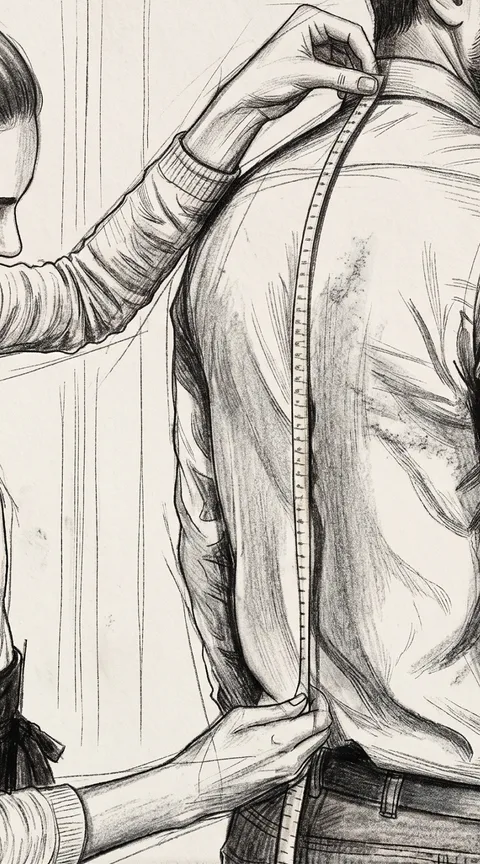
Before discussing adjustments, it is critical to understand how a proper fitting works. Many men believe they have been “measured” when in reality they have only been sized.
A true fitting evaluates:
- Shoulder width and slope
- Chest and waist balance
- Jacket length relative to height and torso
- Sleeve pitch and arm mobility
- Trouser rise, seat, and break
- Posture and natural stance
Measurements alone are insufficient. Two men with identical chest sizes may require entirely different jacket constructions depending on posture and shoulder structure.
When learning how to get fitted for a suit, timing matters as well. Fittings should be done:
- Standing naturally, not forced into a posture
- Wearing appropriate shoes
- With the intended shirt style in mind
- With clarity about where and how the suit will be worn
Professionals who rush this step often pay for it later in limitations that no alteration can fully resolve.
How to Get Your Suit Tailored: The Correct Order of Operations
One of the most common mistakes men make is tailoring in the wrong sequence. Alterations should follow a logical hierarchy, not convenience.
The correct order:
- Shoulders and balance assessment – Determines viability
- Jacket length and stance – Sets proportion
- Chest and waist shaping – Controls silhouette
- Sleeve length and pitch – Ensures mobility
- Trouser seat, rise, and taper – Completes the line
Skipping steps or focusing only on visible areas leads to imbalance. For example, slimming a jacket waist without addressing shoulder balance creates tension and distortion. Shortening sleeves without correcting pitch causes pulling when the arms move.
Knowing how to get your suit tailored properly is less about asking for specific alterations and more about trusting a process led by experience.
How to Tailor a Suit Jacket: What Actually Matters
The jacket defines the suit. If it fails, nothing else compensates.
Key elements that matter most:
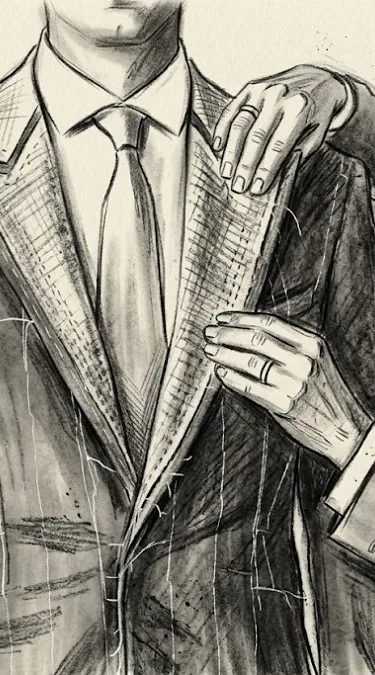
- Shoulders: Shoulders determine the entire drape of the jacket. While minor refinements are possible, significant shoulder reconstruction is complex and often cost-prohibitive. This is why starting fit matters more than aggressive tailoring later.
- Jacket Length: Modern fashion has pushed shorter jackets, often at the expense of proportion. Proper length balances the torso and creates visual authority. Too short reads casual. Too long reads dated.
- Chest and Waist: A clean chest should lie flat without pulling. Waist suppression should follow the body without creating an hourglass effect. Over-tailoring here is one of the most common professional mistakes.
- Sleeves: Sleeve length is not purely aesthetic. The correct length allows shirt cuff visibility and ensures the jacket moves with the arm. Sleeve pitch—often ignored—is what prevents twisting and pulling when reaching or typing.
Understanding how to tailor a suit jacket means recognizing that precision is subtle. The best tailoring is felt before it is noticed.
The Suit Alteration Guide Every Professional Should Know
Not all alterations are created equal. Some are straightforward. Others should raise immediate caution.
Common, high-success alterations:
- Sleeve length adjustments
- Trouser hemming
- Waist suppression
- Seat refinement
- Tapering trousers
Alterations requiring expert evaluation:
- Jacket length changes
- Collar roll and neck balance
- Sleeve pitch correction
- Shoulder refinements
Alterations that often signal a bad starting point:
- Major shoulder resizing
- Extreme chest reduction
- Structural reshaping beyond one size
A reliable suit alteration guide prioritizes honesty over optimism. A professional tailor should advise when tailoring will enhance a garment—and when it will not.
Bespoke Suit Guide: When Custom Becomes the Better Decision
There is a point where repeated alterations cost more than building the suit correctly from the start.
A bespoke suit guide should help identify that threshold.
Bespoke tailoring becomes the smarter option when:
- Body proportions consistently challenge off-the-rack fits
- Posture requires pattern-level adjustments
- Time is limited and predictability matters
- The suit will serve high-visibility professional roles
- Longevity and repeat wear justify the investment
Bespoke is not about indulgence. It is about control. Fabric, structure, lapel width, button stance, and balance are decided before construction—not negotiated afterward.
For professionals who rely on appearance as part of their career capital, bespoke eliminates compromise.
Speed, Precision, and Why Process Matters
One of the greatest frustrations professionals face is slow tailoring that still misses the mark. Speed alone is not the problem. Lack of process is.
Tailoring done entirely in-house allows:
- Direct oversight of construction and alterations
- Faster feedback loops between fitter and tailor
- Consistent quality standards
- Real accountability for outcomes
When alterations are outsourced or fragmented, timelines stretch and precision erodes. For men who operate on tight schedules, reliability is as important as craftsmanship.
True tailoring respects both.
How Professionals Should Think About Tailoring Long-Term
The most polished men do not approach tailoring as a one-time service. They build a relationship with a tailor who understands their body, preferences, and professional demands.
Over time, this creates:
- Consistent fit across garments
- Faster fittings
- Fewer corrections
- Better wardrobe planning
- Predictable results under pressure
A suit should never feel like a gamble.
Closing Perspective
A suit that fits correctly does more than look good. It removes friction from daily life. It allows focus to stay on performance, not presentation. That is the real value of tailoring done right.
For professionals seeking a partner who understands modern silhouettes, demanding timelines, and uncompromising standards, ATL Tailor offers a tailoring experience built for real-world use—where craftsmanship, speed, and precision work together. Schedule a private fitting or visit ATL Tailor to experience how proper tailoring changes not just how a suit looks, but how it works for you.