Filed under Bespoke by Design
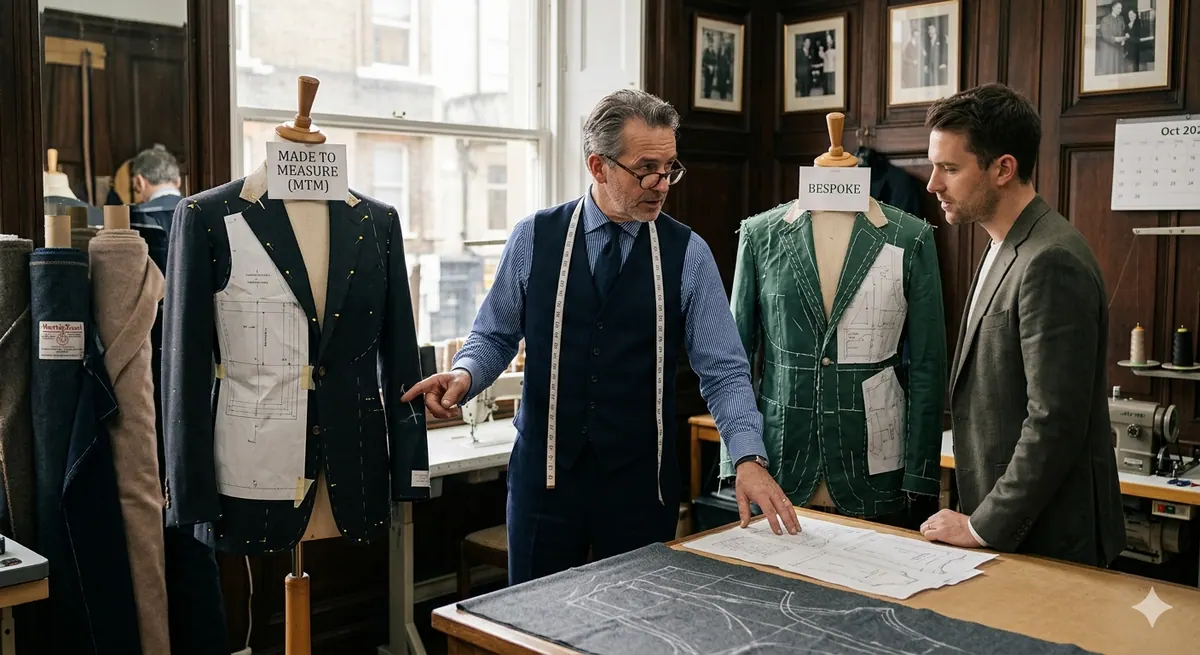
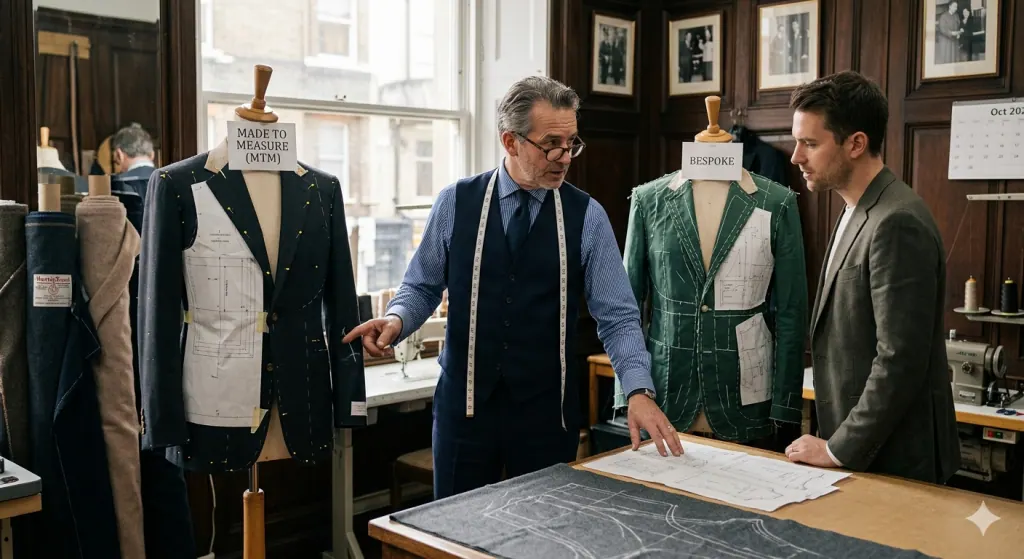
There is a version of this conversation happening in every serious menswear circle in Atlanta right now. Two men, both well-dressed, both invested in how they present themselves professionally.
One says he had a suit made to measure. The other says his is bespoke. Neither is entirely sure the distinction matters.
It does.
The difference between made to measure vs. bespoke is not just a vocabulary debate. It affects the fit, the construction, the longevity, and ultimately the value of every suit a man invests in.
Understanding that difference is not about snobbery. It is about making an informed decision with real money.
ATL Tailor works with both approaches. What follows is a straight, no-nonsense breakdown of what each term actually means, where the lines are drawn, and how Atlanta professionals can decide which is right for their wardrobe and their lifestyle.
Why the Terminology Gets Confusing
The fashion industry has a long history of using premium-sounding language loosely. “Bespoke” is one of the most abused words in menswear marketing. Brands apply it to anything that involves a customer making a selection from a menu of options. That is not bespoke. That is customization within a predefined system.
Made to measure has the opposite problem. It is a legitimate and valuable service that gets undersold because it lacks the prestige association of the word bespoke. Many men dismiss it without understanding what it actually delivers.
Both terms deserve accurate definitions. Here they are.
What Made to Measure Actually Means
Made to measure starts with an existing pattern block. That block is a standardized template, built around average proportions for a given size range. When a client comes in for a made to measure suit, the tailor takes their measurements and adjusts that base pattern to accommodate their specific dimensions.
The result is a garment that fits significantly better than anything off the rack. Trouser length, jacket chest, sleeve length, waist suppression. All of these are dialed in to the individual. The client also selects the fabric, the lining, the button style, and several design details.
It is a meaningful upgrade from retail. For many professionals, it is exactly what they need.
But made to measure has structural limits. The base pattern determines the foundational shape of the garment. If a client has a significant posture consideration, an unusually high shoulder, or a physique that diverges substantially from standard proportions, the adjusted base pattern may still not get the fit right. The pattern was not built for that body. It was adapted for it.
This distinction matters more than most men realize until they put the finished suit on.
What Bespoke Actually Means
Bespoke is a term with a specific origin. It comes from the tailoring districts of London, where a customer would “bespeak” a cloth. The fabric was spoken for, reserved entirely for that individual commission. Nothing about the garment starts from a template someone else used.
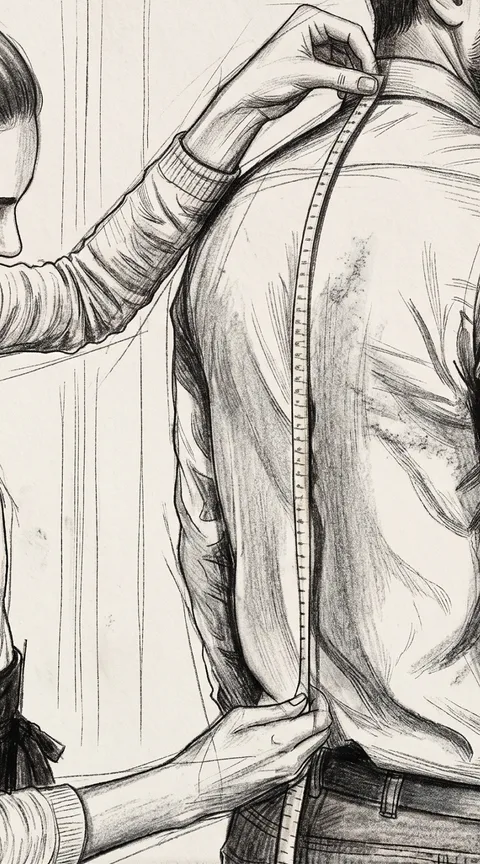
A true bespoke suit begins with a pattern drafted from scratch. The tailor takes a full set of measurements, studies the client’s posture, notes how they carry their shoulders, observes where they hold tension in their stance, and builds a pattern that reflects that specific body. Every measurement is proprietary to that client.
From there, the garment is cut, basted, and fitted through multiple sessions. The client tries on a canvas shell before the final fabric is ever cut. Adjustments are made. The process continues until the fit is exactly right.
The internal construction of a bespoke suit also differs fundamentally. A full canvas chest, hand-padded lapels, hand-sewn buttonholes. These are not decorative gestures. They are structural choices that affect how the suit drapes, how it moves, and how it ages. A properly constructed bespoke suit improves with wear over years, not months.
This is what custom tailored suits atlanta should mean when the word bespoke is used. ATL Tailor builds every bespoke commission to this standard, with all work completed in-house under the direct supervision of the head tailor.
The Construction Difference: Where the Real Gap Lives
Most style guides stop at the pattern explanation. The construction difference is where the real story is.
In made to measure, the suit is typically constructed by machine, with some hand finishing applied to visible details. That is not a criticism. Machine construction, when done well with quality fabric, produces a clean, durable garment. The issue is what machine construction cannot replicate.
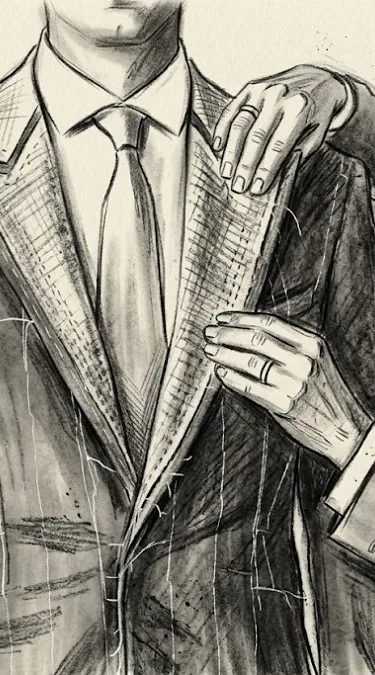
A hand-padded lapel rolls differently than one pressed into shape by machine. It has a natural, soft break that moves with the body rather than holding a rigid position. Over time, a machine-fused lapel can separate or bubble. A hand-padded lapel does neither.
A full canvas chest, found in true bespoke clothing, is a floating layer of horsehair canvas that sits between the outer fabric and the lining. It molds to the chest over time, creating a fit that improves the more the suit is worn. Fused or half-canvas construction, standard in made to measure, bonds the chest with adhesive. It is solid from day one, but it does not evolve.
Hand-sewn buttonholes are another marker. They look different. They wear differently. They are an indicator of the time and skill invested at every other stage of the garment’s construction.
These details are not visible on a hanger. They become apparent on the body, over time, under the pressure of a long workday or a high-stakes event.
The Fitting Process: One Session vs. Multiple
Made to measure typically involves one measurement appointment. Measurements are taken, selections are made, and the finished garment arrives at a later date. Some services offer a single fitting when the suit is complete. Adjustments can be made, but they are alterations to a finished garment, not refinements to the pattern itself.
Bespoke involves a process. The first appointment establishes measurements and discusses the commission. A basted fitting follows, where the client wears an unfinished shell of the suit and the tailor makes live adjustments directly on the body. A second fitting confirms those changes. The final garment is delivered only when the fit has been validated through this process.
For ATL Tailor’s bespoke clients, this process produces a custom suit atlanta that does not require further alterations. It arrives correct because the correction happened during construction, not after.
The bespoke fitting process also teaches the client something about their own body. The tailor notes tendencies, explains why certain adjustments were made, and builds a permanent record of the client’s measurements and pattern. Future commissions are faster and more refined because the foundation already exists.
Price: What Each Level of Investment Actually Buys
Made to measure costs more than off the rack. Bespoke costs more than made to measure. That is the simple version.
The more useful framing is this: what does each investment return?
A made to measure suit in quality fabric, from a skilled service, delivers a wardrobe workhorse. It fits well. It photographs well. It performs in client meetings, courtrooms, and conference rooms without issue. For a professional who needs two or three suits in rotation and wants them to look sharp without the full bespoke commitment, made to measure is an intelligent choice.
A bespoke suit is a longer-term investment. The construction means it can be altered and maintained over years, even decades. The pattern lives with the tailor, meaning future commissions build on a proven foundation. The garment improves with wear. It is not just a suit. It is a relationship with a craftsperson and a piece of clothing that returns the investment over time.
For the Atlanta professional who wears a suit five days a week, argues cases or closes deals in rooms where appearances are scrutinized, and understands that quality is cheaper in the long run than replacement cycles, bespoke is not an indulgence. It is a practical decision.
When to Choose Made to Measure
Made to measure is the right choice in several specific circumstances.
When timeline is the priority, made to measure delivers faster. ATL Tailor’s turnaround for a custom suit atlanta can be as fast as 10 days with rush fee. For a professional who needs a sharp suit for an upcoming event and does not have time for a multi-fitting bespoke process, made to measure closes the gap effectively.
When the body is still changing, made to measure makes more sense. A client who is actively training, losing weight, or anticipating significant physical changes in the next year may not want to invest in a bespoke pattern that will need full re-drafting. A made to measure suit serves the current body well, with the bespoke commission reserved for when measurements have stabilized.
When the budget calls for it, made to measure delivers exceptional value. A well-executed made to measure suit from an experienced tailor, in a quality fabric, will outperform any off-the-rack garment at twice the price.
When to Choose Bespoke
Bespoke is the right choice when the body has particular fitting challenges. Clients with a significant difference between their right and left shoulder height, a pronounced forward posture, or a physique built outside standard proportions will never get a fully correct fit from a pattern that was not built for them. Bespoke solves this by beginning with their reality, not a standard assumption.
Bespoke is the right choice for high-stakes wardrobe investments. A suit intended to represent a client in the most demanding professional or social contexts deserves the most precise construction available. That means a tailor for suit alterations is no longer the right conversation. That means bespoke from the start.
Bespoke is the right choice for clients who value permanence. The relationship with an ATL Tailor craftsperson, the permanent pattern, the construction that ages well rather than deteriorating. These are not abstract benefits. They are practical advantages that pay back over the life of the garment.
ATL Tailor’s Position: Legacy Craft at Atlanta’s Pace
ATL Tailor’s head tailor trained in Vietnamese tailoring traditions from childhood. That foundation is not a marketing footnote. It shapes how every garment is approached, whether the commission is a made to measure sport coat for a creative director or a full bespoke suit for a corporate attorney preparing for trial.
All work is done in-house. No outsourcing. No shared production. The tailor who takes the measurements is the tailor who cuts the pattern and oversees the construction. That chain of custody is what quality control actually looks like in a bespoke clothing context.
For clients in Atlanta who cannot step away from a demanding schedule, ATL Tailor offers house and office visits for measurements and delivery. The process accommodates the pace of the city without compromising the standards of the craft.
Alterations atlanta clients who have previously used general alteration tailors near me often arrive at ATL Tailor after a frustrating experience. A suit returned that still does not fit. A jacket where the shoulder correction created a new problem at the sleeve.
That is what happens when alteration work is treated as a mechanical task rather than a tailoring judgment call. At ATL Tailor, every alteration is evaluated the way a bespoke commission is, with full attention to how the change affects the garment’s overall structure.
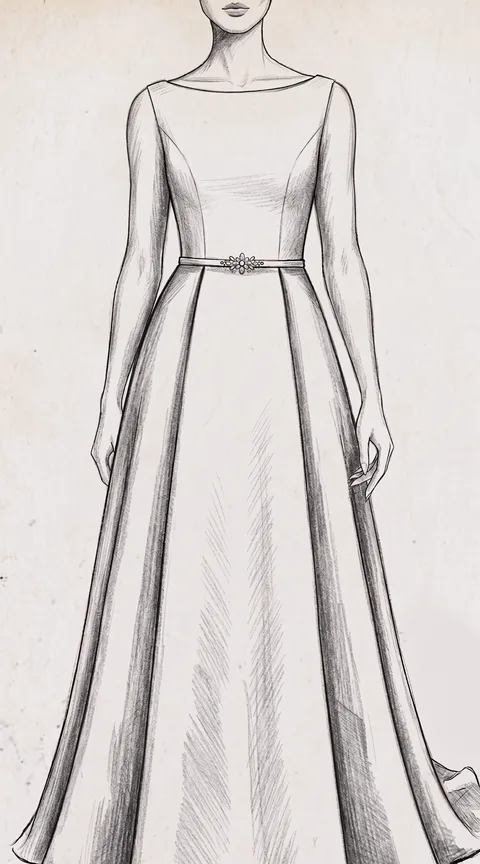
Wedding dress alterations atlanta ga, custom dresses, and bespoke clothing for women follow the same principles. The dressmaker in atlanta approach at ATL Tailor applies the same in-house, hand-finished standards to every commission, regardless of the garment’s category.
Stop Settling for a Suit That Almost Fits
Most men in Atlanta are wearing the wrong suit. Not the wrong color or the wrong fabric. The wrong fit. A chest that pulls across the shoulders. A jacket that adds bulk instead of removing it. Trousers that break at the wrong point and undercut an otherwise sharp appearance.
The frustrating part is that most of them know it. They have looked in the mirror before a client meeting or a courtroom appearance and felt the gap between how they look and how they want to look. They just have not done anything about it.
That gap is a choice. So is closing it.
Made to measure vs. bespoke is ultimately a question about how seriously a man takes his presentation. Both options outperform anything off a retail rack. Both are available at ATL Tailor with turnarounds built for a city that does not slow down.
What separates a professional who looks good from one who looks exactly right is the decision to stop accepting almost and start demanding precise.
Atlanta’s most competitive professionals already know this. The ones walking into negotiations, courtrooms, and boardrooms with complete confidence in how they look did not get there by settling. They made a decision and acted on it.
That decision starts with one appointment. Book a consultation with ATL Tailor today. Schedule a fitting, request a house or office visit, or bring in a garment for assessment. The difference between a suit that fits and a suit that is built for you is one conversation away.