Filed under Suit Culture
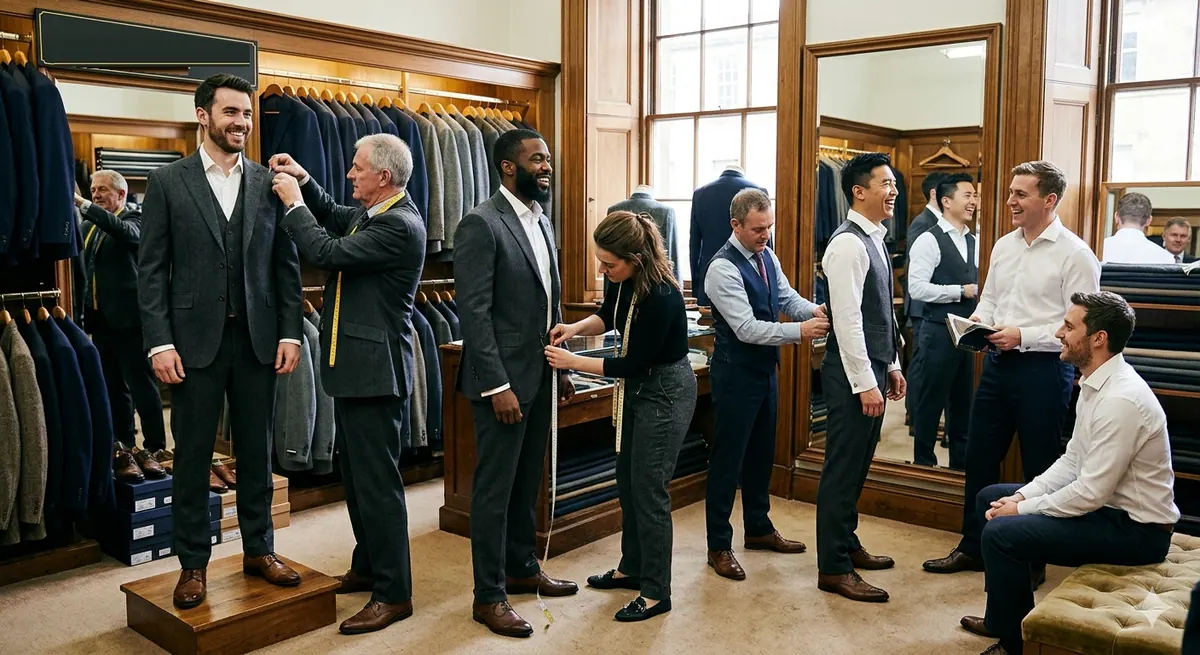
Most men have worn a suit that didn’t quite fit. The shoulders were slightly off. The jacket pulled at the chest. The trousers broke at the wrong point. You knew something was wrong, but you wore it anyway because it was what you had.
Getting your suit tailored changes that entirely. But for many professionals, the fitting room is unfamiliar territory. What do you say when you walk in? What does a tailor actually measure? How do you know if the fit is right? These are fair questions, and the uncertainty alone keeps plenty of well-dressed men in suits that are close enough but never quite right.
This guide walks you through the entire process: what to expect at your first suit fitting, how a master tailor approaches a new client, what the measurements actually mean, and what separates a great tailoring experience from a forgettable one. If you’re searching for tailored suits near you or looking to get fitted for a suit for the first time, this is where to start.
Before You Get Your Suit Tailored: What to Bring and What to Know
A fitting is a conversation, not a transaction. The more context you give your tailor, the better the result. Before your appointment, think through a few things.
- Know the occasion. A bespoke suit for a courtroom appearance calls for different construction, fabric, and silhouette than one for a black-tie gala or a weekend wedding. Your tailor needs this context early. Showing up and saying “I need a suit” gives them very little to work with.
- Bring the shoes you plan to wear. Trouser length depends entirely on footwear. A tailor who hems your trousers while you’re wearing dress sneakers will give you a different break than one who measures you in your Italian oxfords. This detail matters more than most clients realize.
- Bring a reference if you have one. A photo of a suit you love, a magazine cut-out, a screenshot from a film. Tailors work from precision, but they also work from vision. Give them something to aim at.
If you already own a suit that fits well in some areas but not others, bring that too. A skilled tailor can read an existing garment and understand your proportions before a tape measure comes out.
The First Meeting: What a Master Tailor Looks for Before Measurements Begin
When you arrive for a fitting at a tailoring house like ATL Tailor, the first thing that happens is not measurement. It’s a consultation. Hong, who has been practicing her craft for nearly 50 years, begins every client relationship the same way: by listening.
She wants to know how you carry yourself. What you do for a living. Where the suit will be worn and what it needs to say when you walk into a room. These aren’t small-talk questions. They shape every decision that follows, from the weight of the fabric to the width of the lapel.
A master tailor reads posture, too. Whether your left shoulder sits slightly lower than your right. Whether you have a forward lean when you stand. Whether your arms hang long relative to your torso. These observations are what separate true bespoke work from made-to-measure templates that simply plug numbers into a pattern.
The Measurements: What Gets Taken and Why It Matters
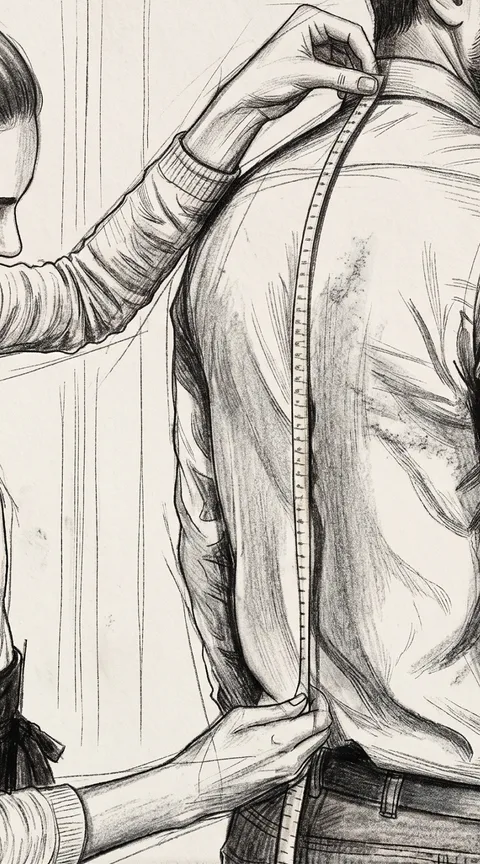
Most off-the-rack sizing uses five or six measurements. A bespoke fitting can involve twenty or more. Each one serves a specific purpose in the final garment.
Shoulders
The shoulder seam is the most critical measurement in a jacket. If it’s off, no alteration will fix it cleanly. A tailor measures shoulder width, slope, and pitch. Men with one shoulder slightly higher than the other, which is more common than people realize, need this compensated for in the pattern. Otherwise, the jacket will always pull to one side.
Chest and Suppression
The chest measurement determines how the jacket buttons and how it drapes when open. But suppression, the amount the jacket nips in at the waist, is where the silhouette is defined. Too little and the jacket looks boxy. Too much and it restricts movement and reads as trendy rather than timeless.
Sleeve Length and Pitch
The standard rule is that a quarter to half an inch of shirt cuff should show below the jacket sleeve. But pitch matters too. If a sleeve is set into the jacket at the wrong angle, it will pull forward or backward when you reach out, creating drag lines across the back. This is one of the most common fit problems in off-the-rack suits and one of the hardest to fix after the fact.
Trouser Seat, Rise, and Break
Trousers fail most men in three places: the seat bunches, the rise is too long or too short, and the break at the shoe is either dragging or hovering. Your tailor measures all three independently. The rise affects how the trouser sits when you’re seated, which matters enormously for anyone spending long days in client meetings or courtrooms.
Choosing the Fabric: Where the Suit Becomes Yours
Once measurements are complete, fabric selection begins. For a bespoke suit, this is one of the most enjoyable parts of the process and also one of the most consequential.
ATL Tailor works with European fabric mills, including Holland and Sherry, Ermenegildo Zegna, Scabal, and Dormeuil, among others. These aren’t decorative names. Each mill produces cloth with distinct characteristics: how it drapes, how it breathes, how it holds a crease, how it wears over years of use.
For Atlanta’s climate and the pace of a professional life here, a few considerations consistently matter.
- Weight. A 9 to 10.5 oz wool works well year-round in Atlanta’s moderate winters and temperature-controlled offices. Lighter tropical wools around 7 to 8 oz are better for summer events and outdoor occasions.
- Weave. A plain weave wears smoothly and reads formal. A twill or herringbone adds texture and character. Both are appropriate for professional settings, but they signal different things.
- Color and pattern. Navy and charcoal remain the strongest choices for versatile professional suits. A mid-grey works well for a second suit. Subtle patterns, a fine stripe, a windowpane, add personality without sacrificing authority. Your tailor should guide you here, not just confirm what you already wanted.
Style Decisions: The Details That Define a Signature Look
This is where custom made clothing earns its name. Once fabric is selected, your tailor walks you through the design decisions that turn a suit into a signature.
- Lapel style. A notch lapel is the most versatile and works across business and formal settings. A peak lapel signals authority and formality. A shawl lapel belongs on a dinner jacket. The width should be proportional to your build, not dictated by what’s trending.
- Button stance. Two-button suits are the standard for professional settings. Three-button styles work on taller frames. The button stance, meaning how high or low the buttons sit on the jacket, affects whether the suit elongates or shortens your torso.
- Vents. A single vent is the American standard. Double vents are more tailored and allow cleaner movement when reaching into pockets. For men who spend time presenting or moving between environments, double vents are worth considering.
Lining, buttons, pocket style, and finishing details like hand-stitched lapels round out the choices. Each one is small in isolation. Together, they’re the difference between a suit that fits and a suit that’s unmistakably yours.
How Many Fittings Does Getting a Suit Tailored Actually Require?
A traditional bespoke suit from a London house might involve three or four fittings over several months. ATL Tailor works differently, because Atlanta professionals don’t have several months.
The process here moves from initial fitting and fabric selection to a completed, ready-to-wear bespoke suit in 10 days with rush fee. Everything is done in-house, which is what makes that timeline possible without sacrificing the quality that a tailor with Hong’s depth of experience demands.
If adjustments are needed after delivery, they’re handled immediately. The goal is a suit that fits precisely when you pick it up, not one that requires a return trip as a matter of course.
Alterations vs. Bespoke: Which One Do You Actually Need?
Not every client needs a suit built from scratch. Understanding the difference between alterations, made-to-measure, and bespoke clothing helps you make the right call for your situation and your timeline.
Alterations work on an existing garment. If you own a well-constructed suit that fits reasonably well but needs refinement, a skilled tailor can take in the waist, shorten the sleeves, taper the trousers, and adjust the break. ATL Tailor completes basic alterations in as little as two hours for clients who need results on the same day.
Made-to-measure takes your measurements and applies them to a pre-existing pattern that gets adjusted. It’s faster and less expensive than true bespoke work, but the foundational pattern is still someone else’s proportions, not yours.
Bespoke clothing means the pattern is drafted specifically for your body, from nothing. Every decision, from the construction of the canvas to the position of the pockets, is made for you. It’s the only approach that accounts for how your specific body moves, stands, and sits. At $899 with a 10-day turnaround (with rush fee), ATL Tailor’s bespoke suit is an accessible entry point into what genuine custom made clothing actually feels like.
What It Feels Like to Wear a Suit That Actually Fits
There’s a moment most clients describe the same way. They put on the finished suit, stand in front of the mirror, and go quiet for a second. Not because it’s flashy. Because it looks exactly like them, only sharper.
The shoulders sit clean. The chest lies flat. The jacket drapes through the waist without binding or pulling. The trousers fall with a break that looks considered rather than accidental. You reach for something and the sleeves move with you instead of against you.
Former Georgia Attorney General Thurbert Baker has been a client for over two decades. The Anchorman 2 costume designer came to ATL Tailor because she’d never worked in Atlanta before and didn’t know how she’d manage without them. Bishop Stephen B. Hall calls the shop family. These aren’t reviews. They’re what happens when craftsmanship and relationship combine over time.
That’s what a suit fitting at ATL Tailor produces. Not just a garment. A relationship with a tailor who learns your body, your taste, and your standards, and delivers against them every time.
Mobile Tailoring: The Fitting Comes to You
For Atlanta professionals who can’t carve time out of a packed calendar to visit Buckhead, ATL Tailor offers mobile fittings at your home or office. The full consultation, measurement, and fabric selection process happens wherever you are. Same expertise, same craftsmanship, different address.
Many clients book mobile fittings 24 to 48 hours before a major event. Same-day appointments are available. If you’ve got a board presentation on Thursday and you need to look exactly right, the timeline is workable. That’s by design.
Ready to Get Fitted?
The next room you walk into could be the one that matters. Walk in with a suit that fits the way it should.Visit ATL Tailor or book a mobile fitting and let us come to you. Walk-ins welcome. Rush appointments available.